

















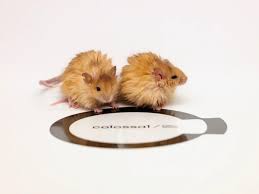







For a long time now, scientists have strived to bring extinct species back from the dead, and that stage has finally arrived. Led by the motivation to recover animals that once roamed planet Earth, a company based in Texas, called Colossal Biosciences, has lately been working on this large goal. By creating 3D-printed artificial “eggs”, Colossal is paving the way for future years, reviving long-extinct birds, and even mice, that could possibly lead to revolutionary discoveries.
Unfortunately, due to climate change and poaching, various species are becoming endangered and extinct. This is one of the main reasons Colossal Biosciences decided to take up the challenge of reviving and saving these animals. This, and the recent creation of the Dire Wolf.
One main animal scientists attempt to revive is the Bluebuck Antelope. Scientists hope to get this done by 2030. You’re probably wondering why people would want to bring back just a random species to add more antelope to the world? Aren’t there enough antelope in Africa? Apparently, controversial to our minds, about 5 species of antelope in Africa are classified as “critically endangered”, on the verge of extinction.
Few other species are also on their way of coming to the world. Some of these include the Woolly Mammoth, extinct for two million years, Great Moa, extinct for about 400 years, and Dodo bird, extinct for about 350 years, all expected to be living in 5-8 years or so. Colossal has already made a start, by hatching artificial pigeon eggs, and more than two dozen tiny chicks. They have also birthed woolly mice, a mini version of the gargantuan Woolly Mammoth.
In fact, one scientist who has a degree in modifying genes shares her side of the story by saying, “It’s so exciting because the technology we are using to create mammoths, dodos, bluebucks, and possibly many other animals, could help save endangered animals today. But honestly, this was really unpredictable, and we don’t fully know how ecosystems today will react to animals that have been gone for such a long time.”
While working to revive the Great Moa, scientists have already decided to let it free in New Zealand, where it originated from. Here is what 6th grade science teacher, Ms. Koonce, says about letting animals in the wild: “It depends. The small ones – the birds, the dodo birds – I think they’re fine if you put them back in the wild- in their natural habitat. Don’t put them somewhere they weren’t already. The Woolly Mammoth, I don’t think that’s a good idea, maybe not a good idea to just let them run free unless they have the space for them- they’re huge…and also they [scientists] need to probably study these animals for a few years before they actually do let them out in the wild.”
Scientists were working on this project for years, so how did Colossal Biosciences manage to finally do it? After years of research and hard work, they figured out that creating eggs from titanium by including cells from living organisms would create lifelike conditions inside the egg. It would mimic how real eggs transfer oxygen. The chicks are very advanced inside the egg too, as they tap the egg on the inside before they’re ready to hatch. However, things are different with the Woolly Mice. Scientists genetically modify the existing embryos in female mice to create new features resembling the one and only Mammoth. They have also collected genetic material from ancient years, and combined these with genes from African and Asian elephants.
Along with supporters, there are some controversies on this topic. Some people believe that although we are creating replicas of ancient species, we’re not exactly “reviving” them. Colossal agrees on this, as they say they’re only creating a genetic copy of the species, but it’s not exact. However, this isn’t the main thing going around. Some individuals believe that “bringing back” these species will only motivate people and poachers to hunt down the animals more. Others believe that these species will not be able to live and adapt into their previous habitats because of climate change and pollution.
What is your perspective? Do you support Colossal Biosciences’ “de-extinction” plan?